🇮🇪
OFW Europe Spotlight
Ireland
Where the rain is soft, the talk is endless, and you're never a stranger for long.
OFW Europe Spotlight
Where the rain is soft, the talk is endless, and you're never a stranger for long.
Landing in Ireland is landing in green. Not a flat, postcard green — a live one, washed by rain, hedged and stoned and soft underfoot, the kind of green that seems to breathe. Then you meet the people, and you understand where the phrase the gift of the gab came from.
This is a country that runs on talk. On a good story told well, on a cup of tea offered before you've even sat down, on the belief that a stranger is just a friend you haven't met yet. For an OFW — and especially for the thousands of Filipino nurses who came to staff Ireland's hospitals — that warmth is the thing you remember.
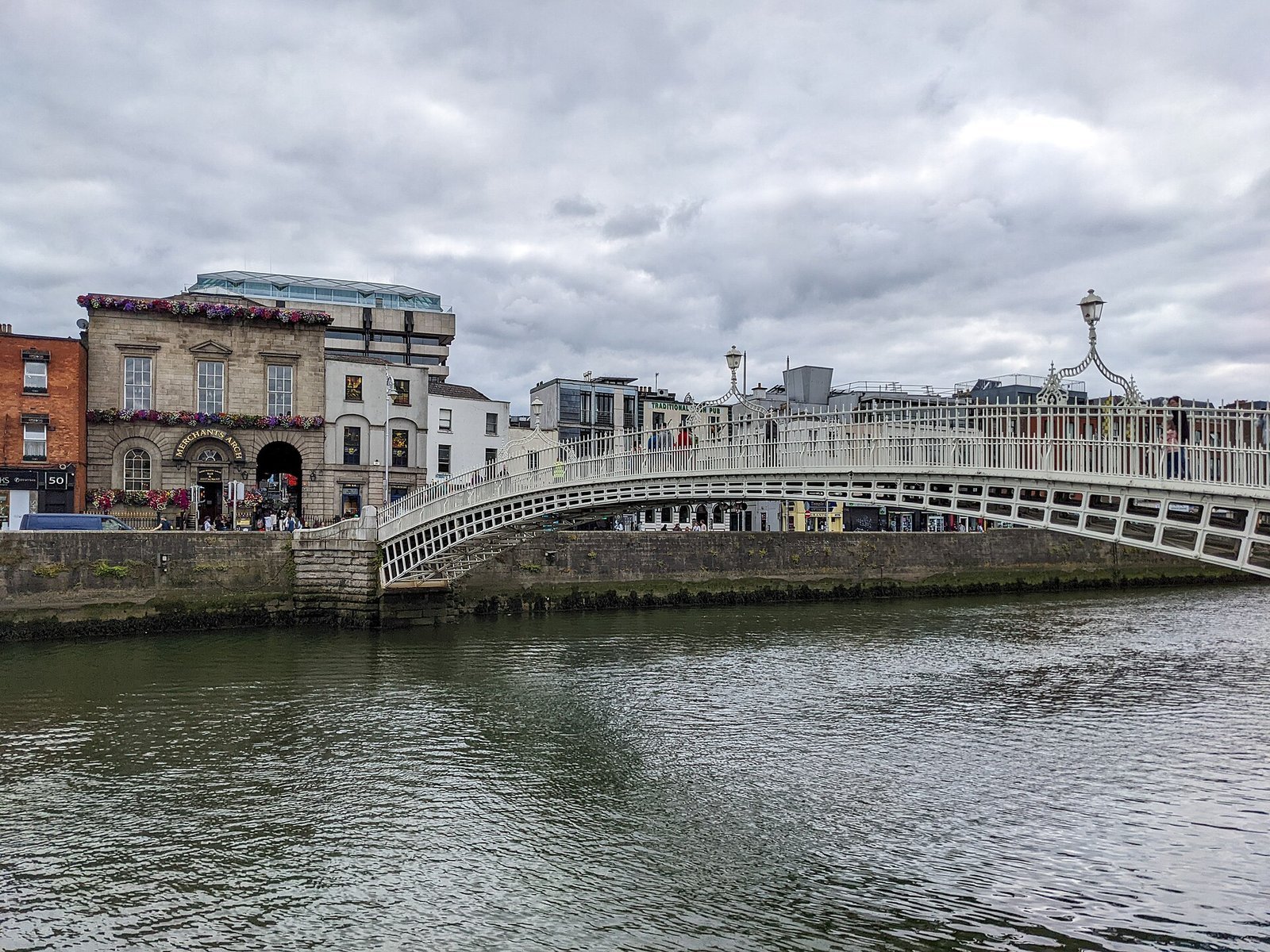
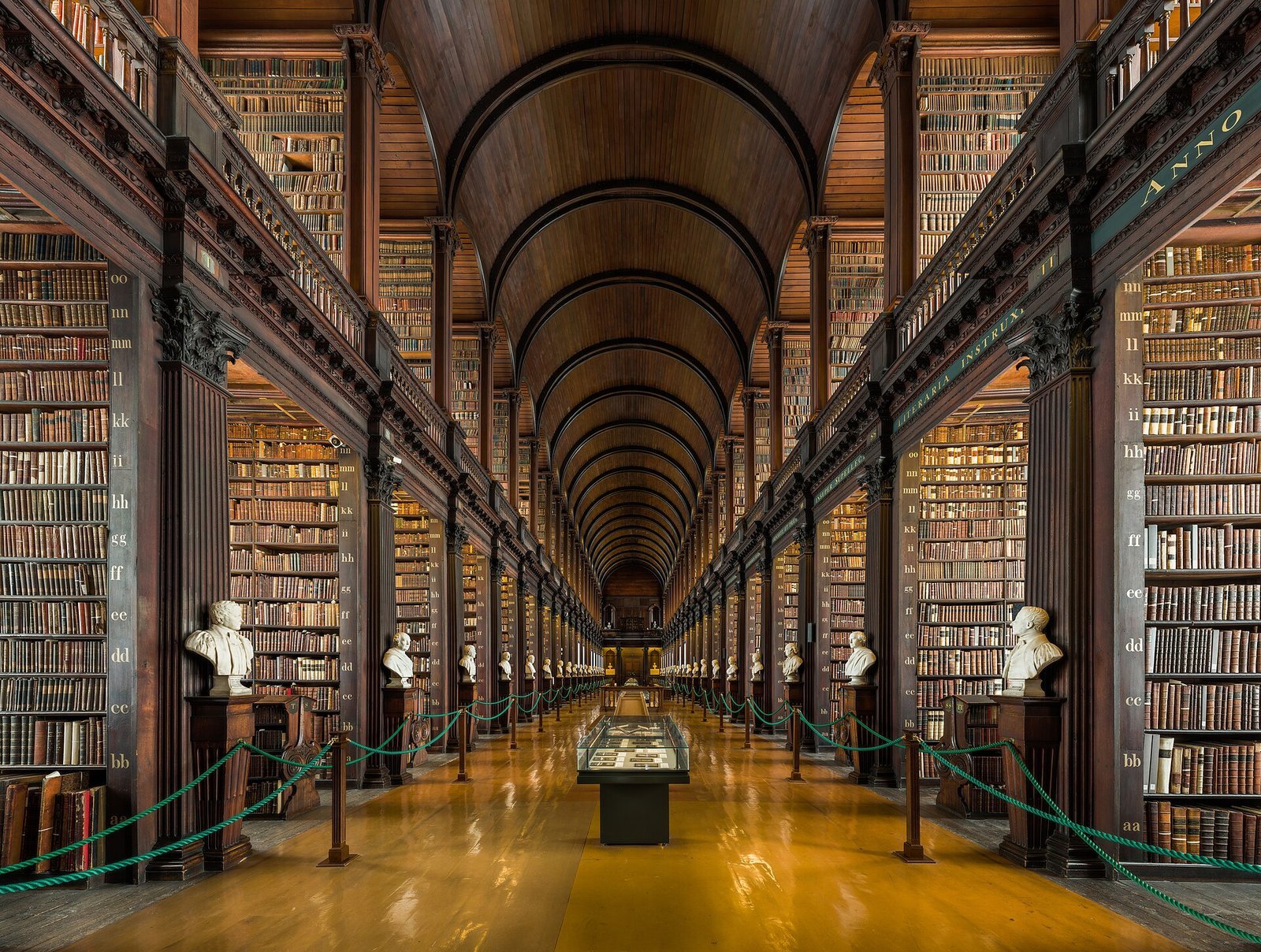
Dublin is a city you can walk across in an afternoon and still not exhaust. The River Liffey cuts it in two, spanned by the arch of the Ha'penny Bridge and the great sweep of the Samuel Beckett Bridge. North of the river, O'Connell Street and the bullet-scarred General Post Office hold the story of 1916; south, Trinity College keeps the Book of Kells in its Long Room, and Grafton Street busks with musicians between the flower stalls.
It is a city of writers — Joyce, Wilde, Shaw, Beckett, all shaped here — and of pubs where the talk is as much the point as the drink. The old Viking quarter around Temple Bar is the postcard, but locals will send you to the real Dublin: the Georgian doors of Merrion Square, the markets of the Liberties, a pint by the fire in a quiet local.
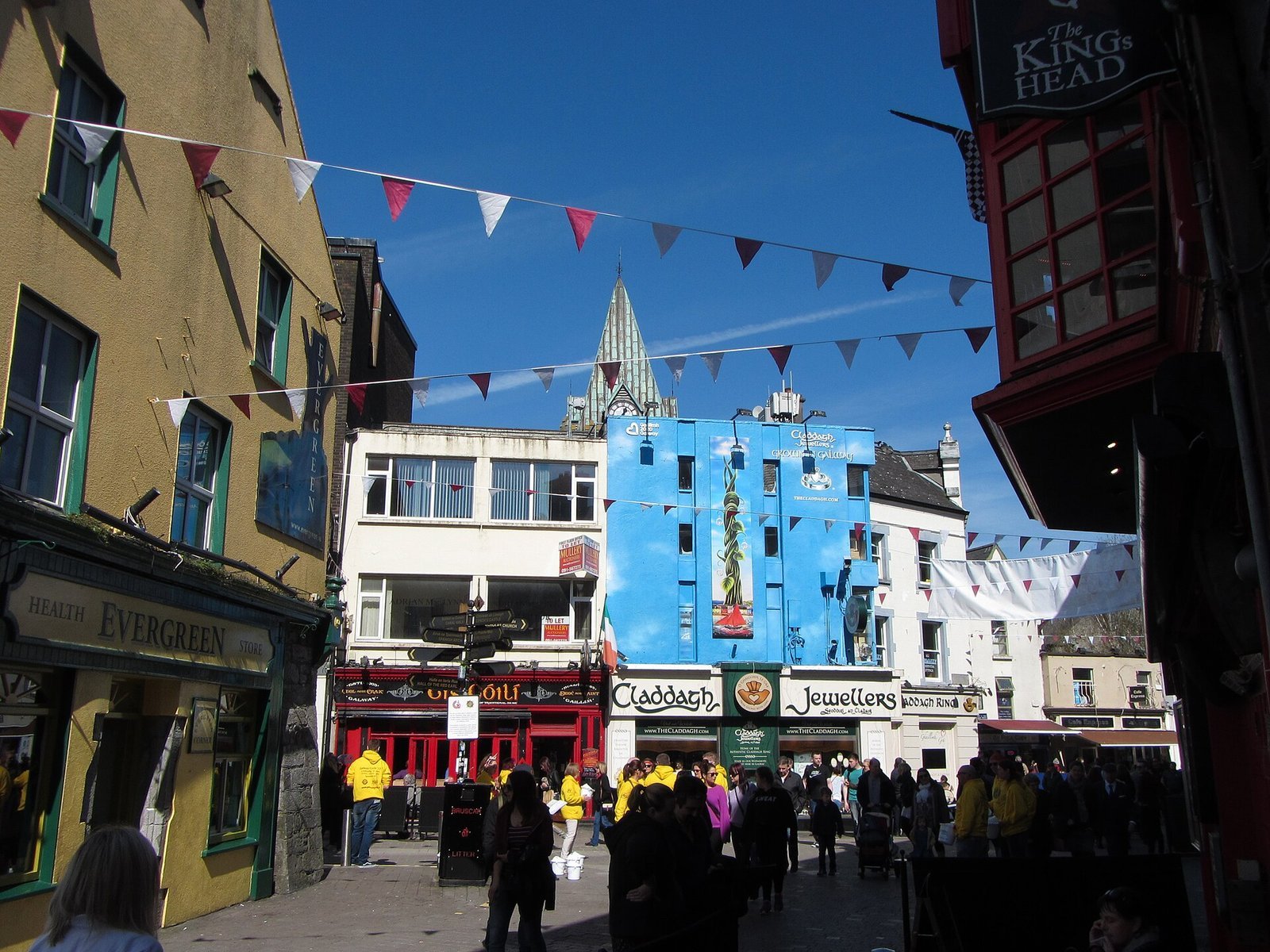
Galway is the beating heart of the west — a small, colourful city where the Corrib river rushes to the sea, Spanish Arch looks out on the Claddagh, and every second pub seems to have a trad session spilling out of the door. Quay Street, with its painted shopfronts and bunting, is one of the liveliest streets in Ireland.
It is the gateway to Connemara and the Aran Islands, to the Twelve Bens and the wild, empty beauty of the Wild Atlantic Way. Every summer it fills with the Galway International Arts Festival, the races at Ballybrit, and musicians from every corner of the world.
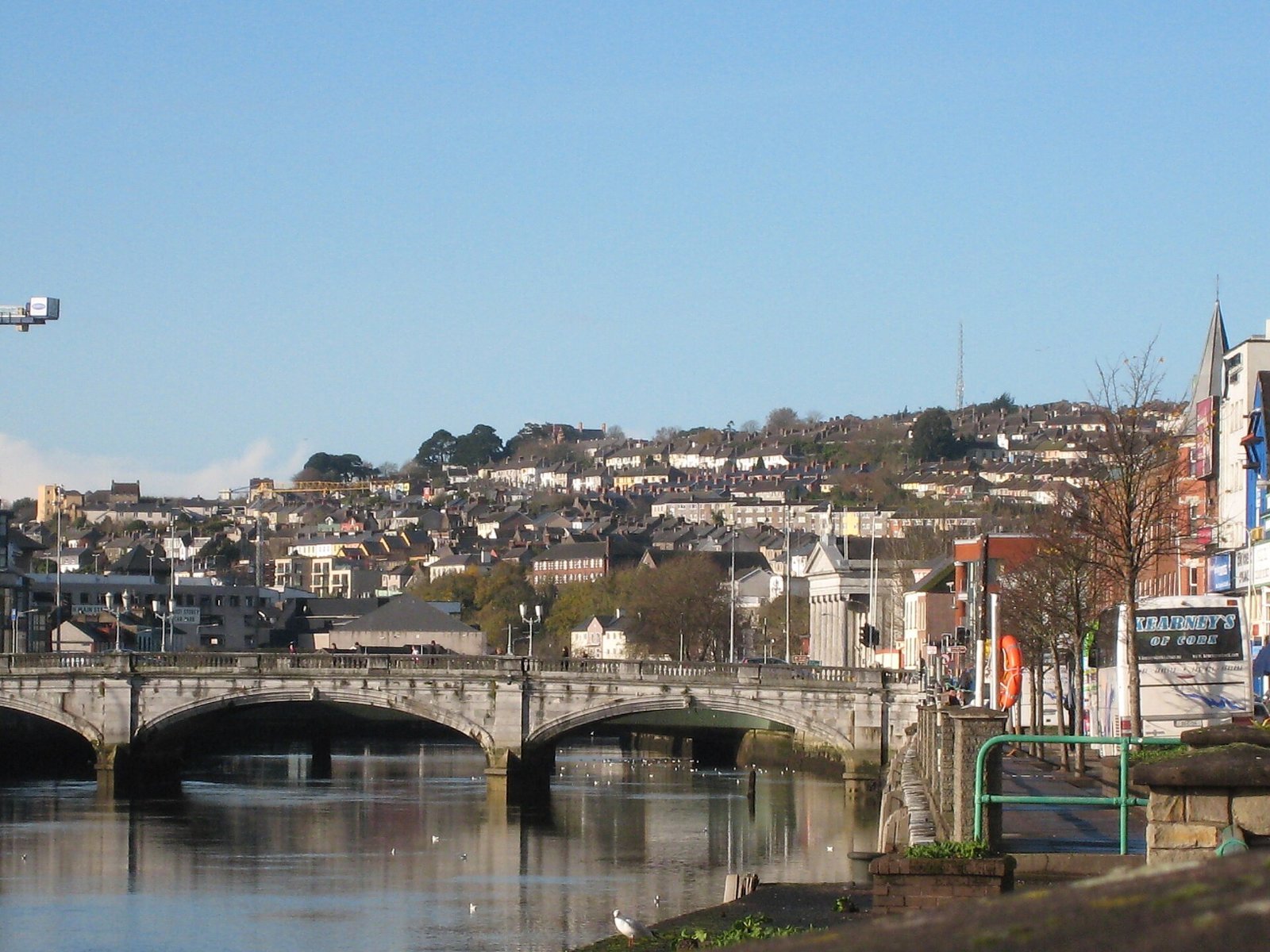
Cork is Ireland's second city and its proudest. Corkonians will tell you, only half joking, that this is the real capital. Built on the River Lee, the city centre is an island of streets and bridges, crowned by the famous Shandon bells — the "four-faced liar" whose two faces never quite tell the same time.
The English Market, trading since 1788, is a cathedral of Irish food: spiced beef, fresh fish, farmhouse cheese and butchers who've worked the same stalls for generations. Nearby, Blarney Castle waits with its stone to kiss. And all around, the green hills of the south roll out to the Atlantic.
Irish food is the food of a green, wet island — hearty, simple and built to keep the rain out and the warmth in. For decades it was underrated; now it is one of Europe's quiet success stories, led by farmhouse cheese, Atlantic seafood and a new generation of chefs.
Lamb or mutton slow-cooked with potato, carrot and onion. The definitive one-pot dish — and the taste of a wet Sunday, made good.
Eggs, rashers, sausages, black and white pudding, grilled tomato and a slice of soda bread. Not a starter — a commitment.
Flour, buttermilk and baking soda — no yeast, no waiting. Baked fresh in kitchens across the country and best still warm with butter.
Creamy Atlantic soup of fish, mussels and potato. A bowl of it on the west coast, with brown bread, is Ireland in one spoonful.
Boiled bacon with cabbage and a creamy parsley sauce — the traditional Irish dinner, still a Sunday staple in many homes.
Chicken, chips, peppers and onion tossed in spices and chilli — the Irish-Chinese takeaway that became a modern national icon.
Craic (pronounced "crack") is one of those Irish words that doesn't quite translate. It means fun, yes, but more precisely it means the company — good conversation, a warm room, a story told well, the feeling that this, right here, is the best place in the world to be. "What's the craic?" simply means how are you, what's happening?
You'll find it in the pub, which in Ireland is less a bar than a living room shared with the whole town. It's there in the session — musicians sitting in a circle playing reels and jigs without a stage or a setlist, anyone welcome to join. It's in the tea, in the slagging (affectionate mockery, a national sport), in the way an old man in a shop will talk to you for twenty minutes about nothing at all.
For a newcomer, it's the fastest door into Irish life. Accept the invitation, learn to give as good as you get, and Ireland opens.
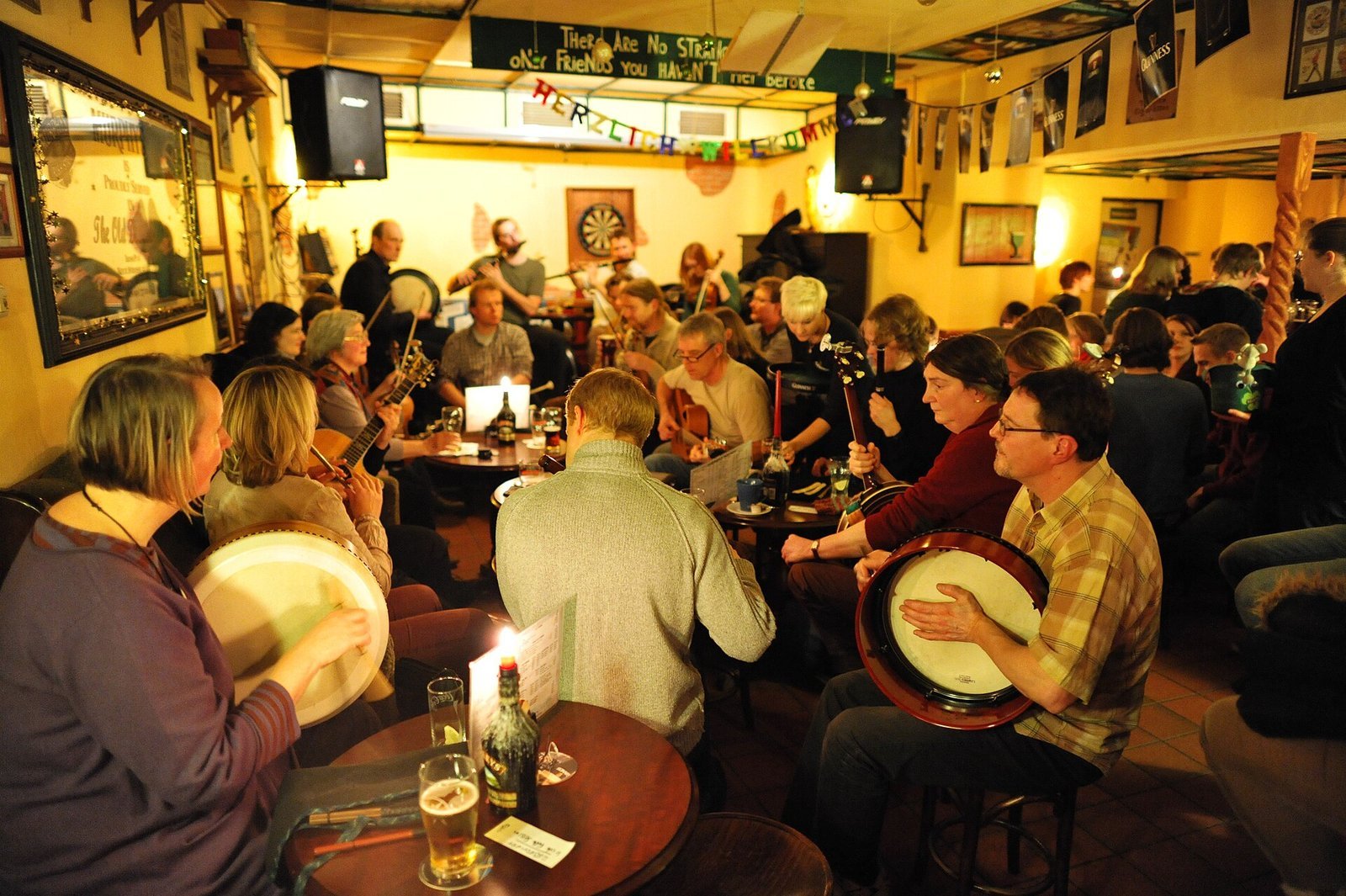
Ireland has produced four Nobel laureates in literature and some of the most quotable writers who ever lived. It is the country of James Joyce, whose Ulysses compressed all of Dublin into a single day; of W. B. Yeats and the poetry of a changing Ireland; of Oscar Wilde's wit, George Bernard Shaw's argument, Samuel Beckett's silence, and Bram Stoker's Dracula.
That literary streak didn't come from nowhere — it grew out of an older tradition of seanchaí, the storytellers who carried history and myth by voice around the fire. The books are the written form of something the Irish have always done best: sitting in a room together, telling a story so well that nobody wants it to end.
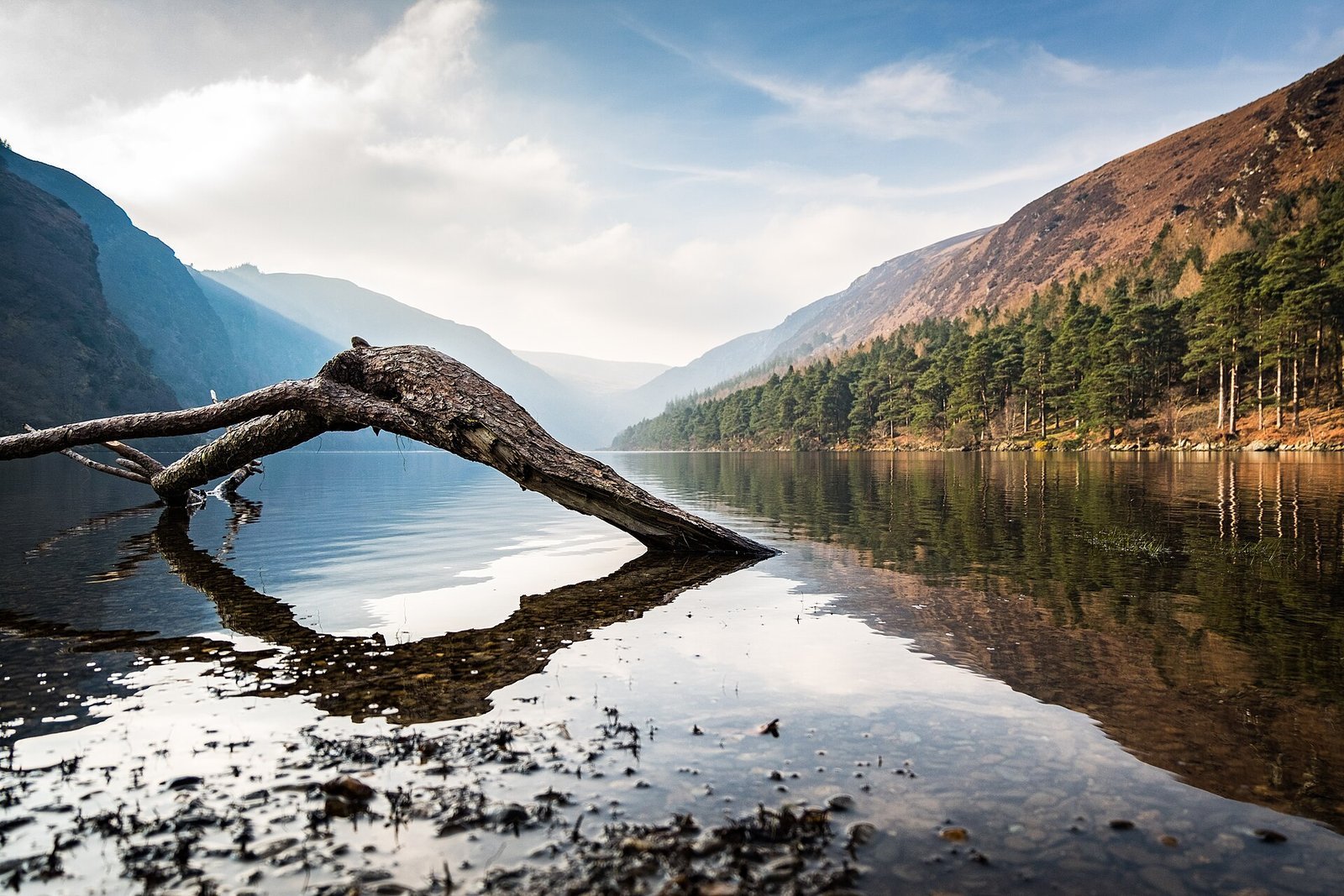
Ireland is an island on the edge of the Atlantic, warmed by the Gulf Stream and watered by the clouds it drags in. That's why it has no real extremes — no freezing winters, no scorching summers, just a mild, damp, endlessly changeable climate. Locals joke that you can get all four seasons before lunch.
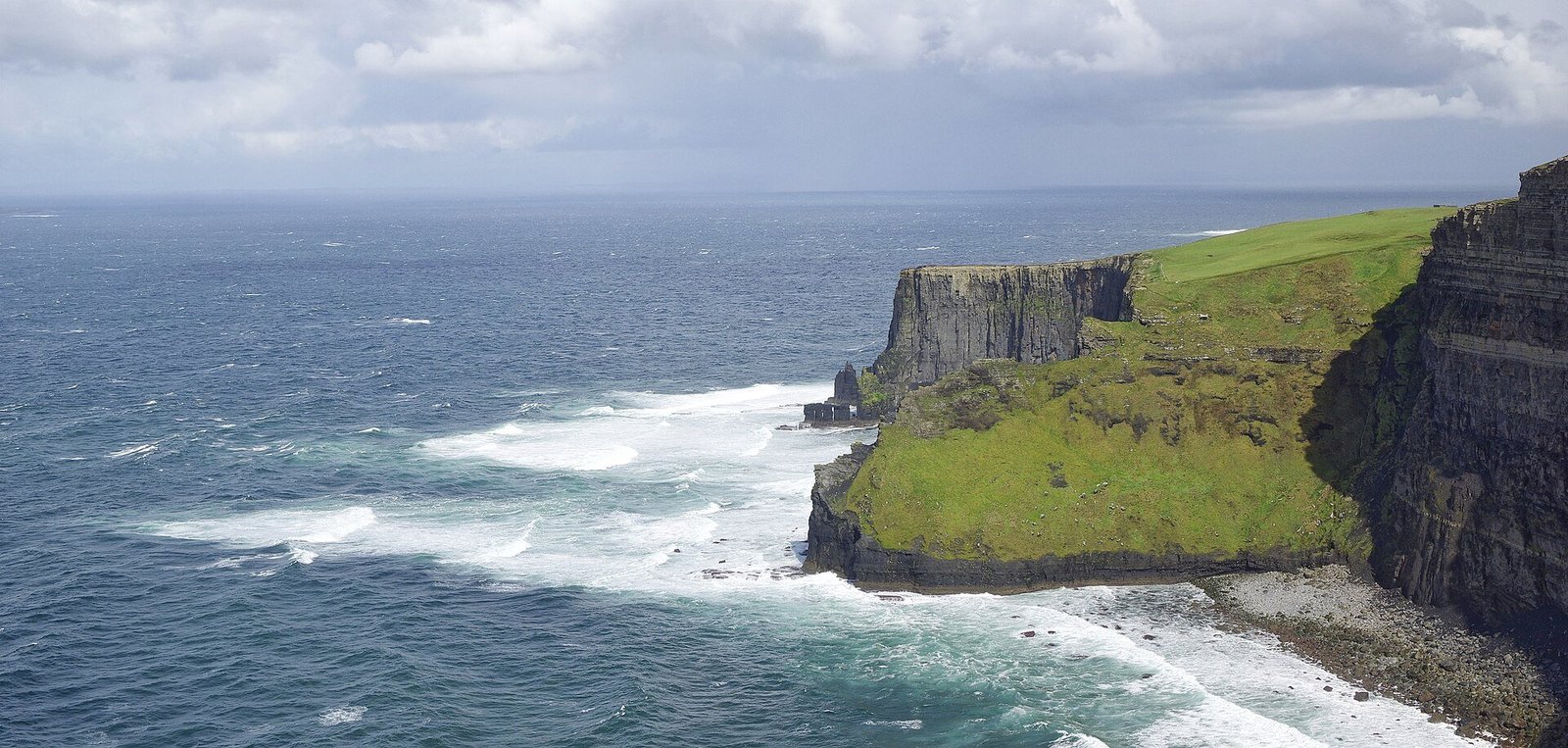
The rain makes the green, and the green is the country's soul: hedgerows and dry-stone walls stitching small fields together, bogs and lakes and mountains, the Cliffs of Moher dropping sheer into the Atlantic, and the Wild Atlantic Way threading 2,500 kilometres of coast. Out on the west, Irish — not English — is still a living, everyday language in the Gaeltacht.
For an OFW from the tropics, the weather takes adjusting. Bring layers, buy a good raincoat, and learn to ignore the drizzle — the Irish do, and the country rewards you for it.
The Irish are warm, talkative and quick to laugh — but there are a few unwritten rules worth knowing. Respect them and you'll feel at home in a week.
Ireland is among the biggest tea-drinking nations on earth. Offered a cup in any house or crisis — the answer is always yes.
Four seasons in a day is not a saying, it's a forecast. Rain is not an event here; it's just weather.
Being teased means being liked. Give it back with a smile — the slagging is how the Irish say welcome.
Find your pub, learn the barman's name, and the community follows. Talk is the entertainment.
For a Filipino worker, Ireland offers something almost nowhere else in the EU does: it is English-speaking. No new language to learn, no barrier between your qualifications and the job — and that changes everything.
It is also one of the places where the Filipino community has put down the deepest roots. Ireland began recruiting Filipino nurses at the end of the 1990s, and today healthcare is the backbone of the community: more than 7,000 Filipino nurses and midwives are registered in Ireland, making them one of the largest nationalities on the register. Around 19,850 people in Ireland were born in the Philippines (Census 2022), and Ireland's health service rests, in a very real way, on the shoulders of workers who arrived from Manila and Cebu and never quite left. The Philippine Embassy in Dublin reopened in November 2024, a sign of how settled the community has become.
The pathway is clear: healthcare roles sit on Ireland's Critical Skills list, and the Critical Skills Employment Permit lets skilled workers bring their families after two years and build toward long-term residency. The national minimum wage — €13.50 an hour from January 2025 — is among the highest in Europe, and as an EU member Ireland gives workers real protections and rights.
The honest part: it is not cheap. Ireland is in the grip of a genuine housing crisis — Dublin rents are among the highest in Europe, and finding a place to live is the single hardest thing most newcomers face. The rain is constant, the winters are grey, and the cost of living bites. But what Ireland gives back is warmth, safety, an English-language life inside the EU, and a community that already knows your story. For thousands of Filipino workers, it has been worth every drop of rain.
We're building a series of country spotlights for the OFW community. If you want to share your story or suggest a destination, get in touch.
This spotlight is for cultural and informational purposes — a love letter to Ireland, not legal or immigration advice. Always verify official requirements with the relevant authorities.