🇮🇹
OFW Europe Spotlight
Italy
Two hundred countries that agreed to share a flag.
OFW Europe Spotlight
Two hundred countries that agreed to share a flag.
The bar opens at six, and by seven it is full of men who have already been at work for an hour. Nobody sits. They stand at the counter with one elbow on the zinc and a macchiato in front of them, and they drink it in two sips while arguing about football with a man whose name they have never asked. The barman has the next order ready before it is spoken. There is a television on the wall with the sound off.
This is the centre of the world. Not Rome, not the Duomo, not the coast — this. A room eight metres wide with a coffee machine and a photograph of the local football team from 1987, and outside it a piazza, and beyond the piazza a road that leaves town, and beyond that, as far as anyone in here is concerned, the argument becomes theoretical.
I want to explain a country through that room, because almost everything about Italy follows from it: the food, the politics, the way a town of six thousand people can hold a grudge against the town nine kilometres away for four hundred years, the reason your neighbour knocks on your door if your shutters are still closed at ten in the morning.
Italy is a young country. It was unified in 1861 — later than Germany, later than almost anyone. Before that there was no Italy to speak of: there were the Papal States and the Kingdom of the Two Sicilies, the Venetian Republic and the Duchy of Milan, Genoa and Florence and a hundred smaller arrangements, most of them armed, several of them foreign-owned. For a thousand years the peninsula was a chessboard, and the pieces had their own languages, their own coins, their own saints and their own ideas about how a sauce should be made.
The word Italians use for what survived all that is campanilismo. It comes from campanile, the bell tower — and it means loyalty to the world within earshot of your own bells. Not the nation. Not even the region. The town, the quarter, the street. Ask an Italian where they are from and you will get a city, not a country: sono fiorentino. Florentine. The rest is a formality they remember when the national team plays.
This is not quaint local colour. It is the operating system. Because the dialects are not accents — several are separate languages, and a Neapolitan and a Venetian in the same room will default to something closer to a foreign language than to the Italian they were both taught at school. Because the recipes genuinely change every few miles, and every town insists that its version is the original and the next town's is a corruption. Because the festivals are not national holidays but the feast day of a saint who belongs to one place and has no jurisdiction anywhere else.
So when people say Italy is a country of contradictions, what they usually mean is that it is not one country at all. It is a couple of hundred of them, holding a single flag between them and arguing, with enormous warmth, about what to have for lunch.
If the bell tower is the geography of Italian life, the table is its liturgy. Sunday lunch is not a meal; it is an appointment with your entire family that begins around one and ends when the light goes. It happens at the grandparents' house, or at whichever house has the biggest table. It runs to five or six courses without anyone treating that as remarkable.
Antipasti first — cured meats, olives, cheeses, something fried that someone made at seven that morning. Then a primo, heavy: lasagne, or hand-rolled pasta, or a risotto that took twenty minutes of stirring by a person who would not accept help. Then a secondo — a roast, a stew, a chicken — with vegetables alongside. Then fruit, then coffee, then a bottle of something sweet that only gets opened when there is company, then pastries brought by whoever arrived last, because nobody arrives empty-handed.
The rules are not on any menu. One of them matters more than the rest: refusing food is a small offence. When the nonna pushes the plate back towards you and says fai il bis — have some more — she is not asking whether you are hungry. She is offering something and watching to see whether you will take it. Accepting is accepting the love. Declining, however politely, is a tiny rejection that will be remembered with a smile for the next fifteen years.
I have eaten in expensive restaurants in that country and remembered nothing. What stays is a kitchen in the heat with the shutters half down, four generations at one table, a television on in the next room that nobody is watching, and an eighty-year-old woman who has decided that you are too thin and has begun, quietly and without discussion, to solve it.
Foreigners find Italians rigid about food. They are not rigid; they are local, and the rules are simply what local looks like when it has had a few centuries to settle. There is no such thing as Italian cuisine. There is Roman food, Neapolitan food, Bolognese food, Sicilian food, and a Venetian who would not presume to tell a Roman how to make carbonara, because carbonara is not his to make.
Once you accept that, the taboos stop looking arbitrary. Cream in carbonara is wrong because carbonara belongs to Rome, and Rome makes it with egg, pecorino, guanciale and the water the pasta cooked in — an emulsion, not a sauce. Cheese on seafood is wrong because the cheese is louder than the fish, and the fish came from somewhere specific that deserves to be tasted. Salad arrives after the meat, not before, to clear the palate. Chicken does not go on pasta: chicken is a second course, and pasta is a first. And nobody breaks spaghetti to make it fit the pot.
This is what people mean when they say the food is a religion. It is not really about flavour. It is about the fact that a recipe is a place — a specific valley, a specific market, a specific grandmother — and changing it carelessly is a way of erasing somewhere. When an Italian refuses to put pineapple on a pizza, he is not being difficult. He is defending a border.
Between six and eight, the town walks. This is the passeggiata, and it is not exercise, and it is not shopping, and it has no purpose that would survive being written down. People dress properly — the good shoes, the jacket, the hair done — and walk slowly up and down the same street, or around the same piazza, for an hour and a half, seeing and being seen.
Teenagers in loud groups. Couples pushing prams. Old men on benches with a hand on a walking stick, holding court. Children running in and out of the fountain until someone shouts. A funeral passes and the whole street goes quiet; a wedding passes and the whole street stops to look. Nothing is bought. Nothing is announced. It is the entire social contract of a town, performed nightly, for free.
It is also the hour when the town's opinion of you is quietly updated. Which is the other side of campanilismo, and it is worth being honest about: a place where everyone knows your name is a place where everyone knows your business. Neighbours are a safety net and a surveillance system at once. If your shutters are still closed at ten, someone will knock to see whether you are ill. They will also notice, and have views about, your recycling.
Riposo — the quiet hours after lunch, and the small hours of the night — is enforced socially rather than legally, and enforced hard. Break it and you will find out how quickly a warm country can turn.
Every culture has its small irrational rules. Italy's are unusually precise, and unusually well observed — the residue of seventeen centuries of Catholicism sitting on top of something much older.
Bread is never placed upside down on the table. It stands for life, and in some houses a loaf that falls to the floor is kissed before it is thrown away; turn one over at dinner and an older relative will reach across and right it without comment, with a look of quiet anxiety. You do not toast with water, or with an empty glass, and you look the person in the eye while you do it. When someone mentions a disaster narrowly avoided, you touch iron — tocca ferro — not wood. Friday the seventeenth is the unlucky one, not the thirteenth: XVII rearranges into VIXI, "I have lived", which is to say, I am dead.
And when someone says something that tempts fate, an Italian may make horns with the hand — index and little finger, pointed down, to ward off the evil eye. Pointed up, the same gesture is an insult about a man's wife. The little red horn amulets sold on every street corner only work, apparently, if they were given to you. Bought for yourself, they are just coral.
None of this is believed literally, and all of it is performed. Non è vero, ma ci credo — it isn't true, but I believe it. That sentence could serve as the country's motto.
On the fifteenth of August, Italy stops. Ferragosto comes out of the Roman calendar — Augustus's festival — and has been folded into the Assumption, but what it actually means is that the country goes to the sea or the mountains and does not come back for two weeks. Shutters come down. Family-run shops close with a handwritten note. Whole neighbourhoods hand themselves over to heat and tourists. The city is still there; it has simply been left, like a house while everyone is at the beach.
Something similar happens every Sunday, in miniature. And something similar, once a year, in each town's own calendar: the feast of the patron saint, when the statue is carried through the streets behind a brass band, the luminarie are strung across the square, the food stalls open, and at eleven at night there are fireworks for a saint who has been dead for sixteen hundred years and who belongs, exclusively, to this one place.
The year has other markers. The sixth of January brings La Befana, the old woman on the broom who fills stockings — the Christmas season ends there, not on the twenty-fifth. Carnevale arrives before Lent with masks in Venice, satirical papier-mâché in Viareggio, and an orange fight in Ivrea that re-enacts a medieval revolt. Autumn brings the sagre: village food festivals at long tables, paper plates, wine from a plastic jug, the local speciality fried by volunteers. On the first of November the cemeteries fill with chrysanthemums, and the day belongs to the dead.
Scaled up, campanilismo becomes the oldest argument in the country. The north — Milan, Turin, Veneto — is industrial, punctual, well-dressed and slightly Mitteleuropean; in Milan the traffic lights are obeyed. The south — Naples, Calabria, Sicily — is warmer, louder, more theatrical, more suspicious of the state, and poorer, and has been explaining itself to the north for a century and a half. In Rome the lights are suggestions. In Naples they are decorations.
The stereotypes are cruel and mostly affectionate and everybody uses them. Milan works. Rome shrugs — sticazzi, roughly, I couldn't care less. Naples performs, and gave the country its pizza and its best music and its most exhausting energy. Venice counts, quietly, from behind a crowd of tourists it resents. Florence judges, in the purest Italian, with a Tuscan accent that drops its hard C's and a tone that suggests it has already reached a verdict.
It is a country that runs on local pride and national exasperation at the same time, and manages, somehow, to be both the most warm-hearted and the most infuriating place in Europe — often in the same afternoon.
There is a reason this matters beyond the postcard. Italy holds the largest Filipino community in the European Union — four decades of it, built largely on care work: women looking after other people's parents so that other people could keep working, in a country whose welfare system quietly depends on exactly that. It is a community that has earned a place in Italian daily life so thoroughly that it is easy to stop seeing it.
But there is something else, and it is the real reason this belongs in a series about places rather than policies. A Filipino in Milan or Rome already understands campanilismo from the inside. To be from a barrio, to measure home by a church tower you can still name, to feel that the town you left is more real than the city you live in — that is not an Italian peculiarity. It is the ordinary condition of anyone who has moved.
Which is why the Sunday Mass in a Filipino parish in Milan functions the way the passeggiata functions for everyone else: the same square, the same faces, the week's news exchanged standing up, a place where you are known rather than processed. The forms differ. The need is identical.
And that, in the end, is what the bell tower means. It is not a building. It is the radius inside which somebody knows your name — and every one of us carries one, in whatever country we happen to be standing.
We're building a series of country spotlights for the OFW community. If you want to share your story or suggest a destination, get in touch.
This spotlight is for cultural and informational purposes — a portrait of Italy, not legal or immigration advice.
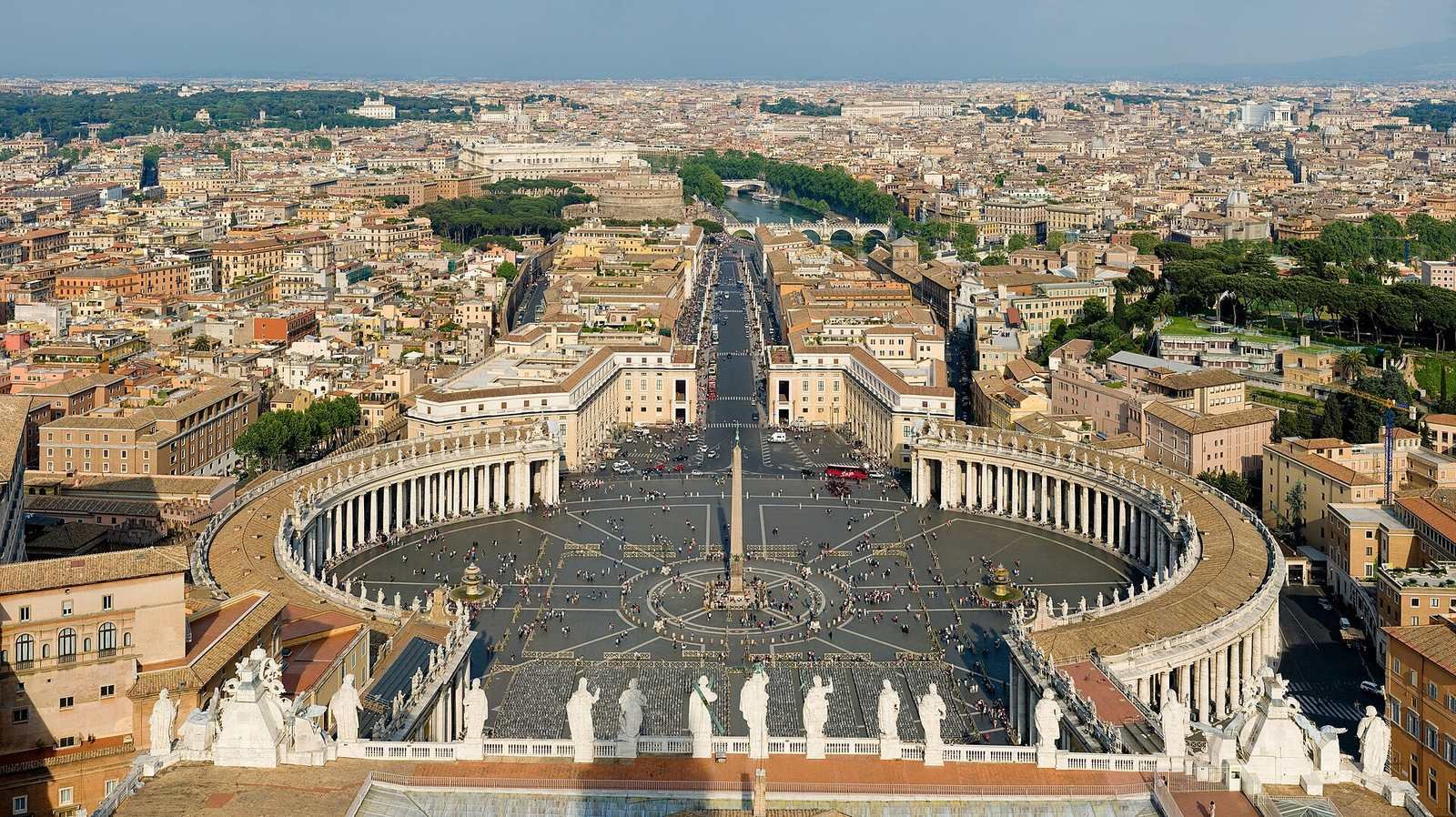
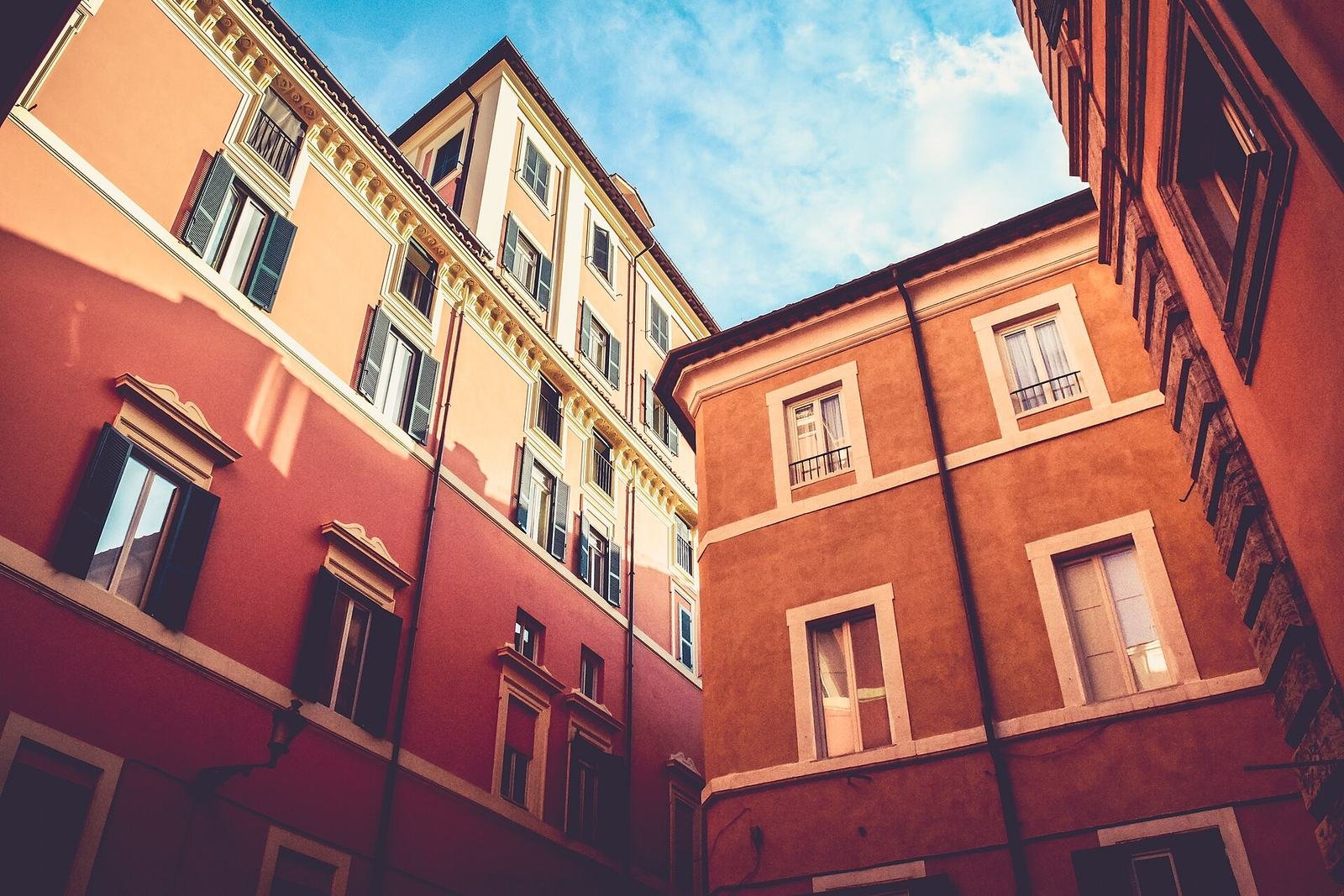
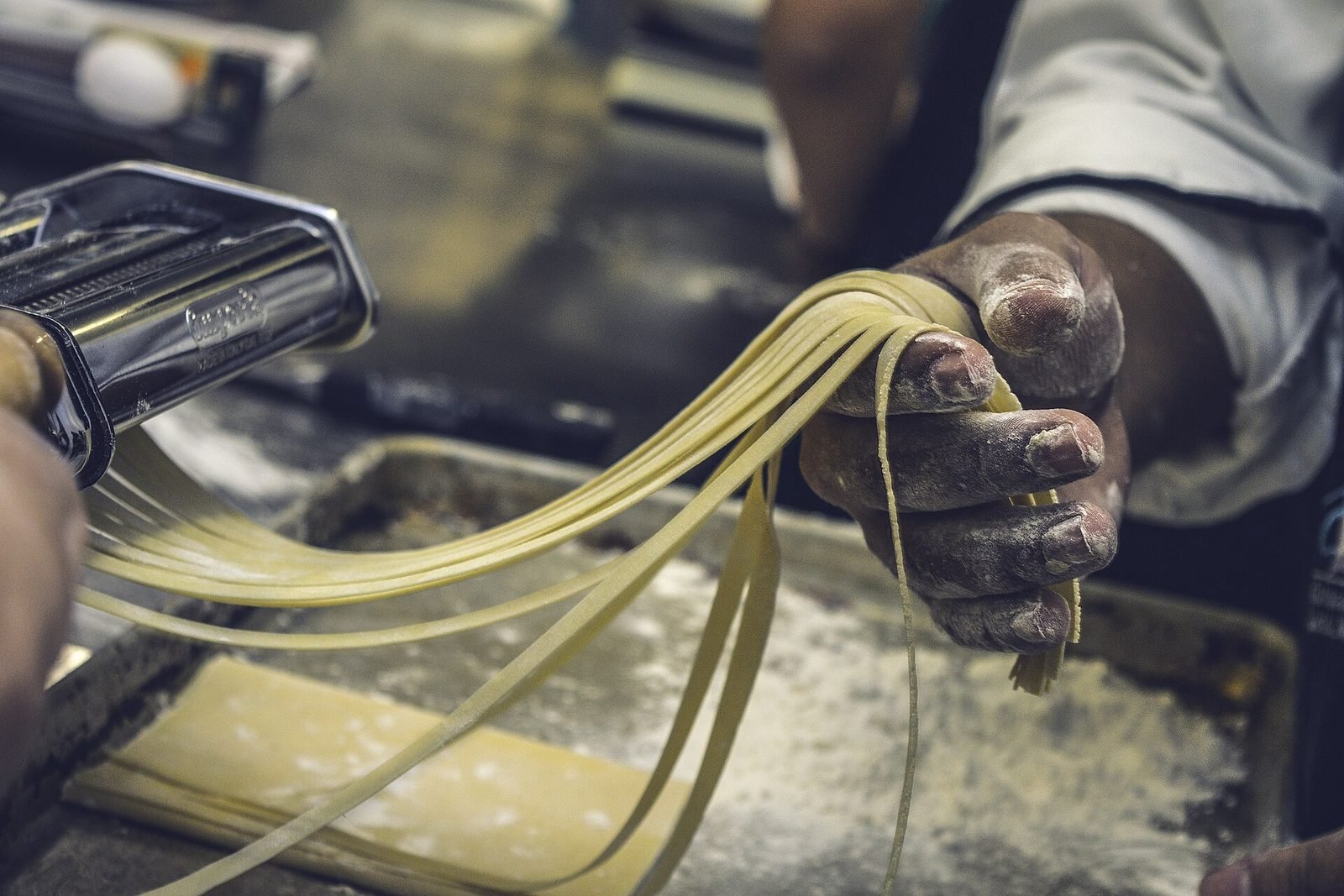
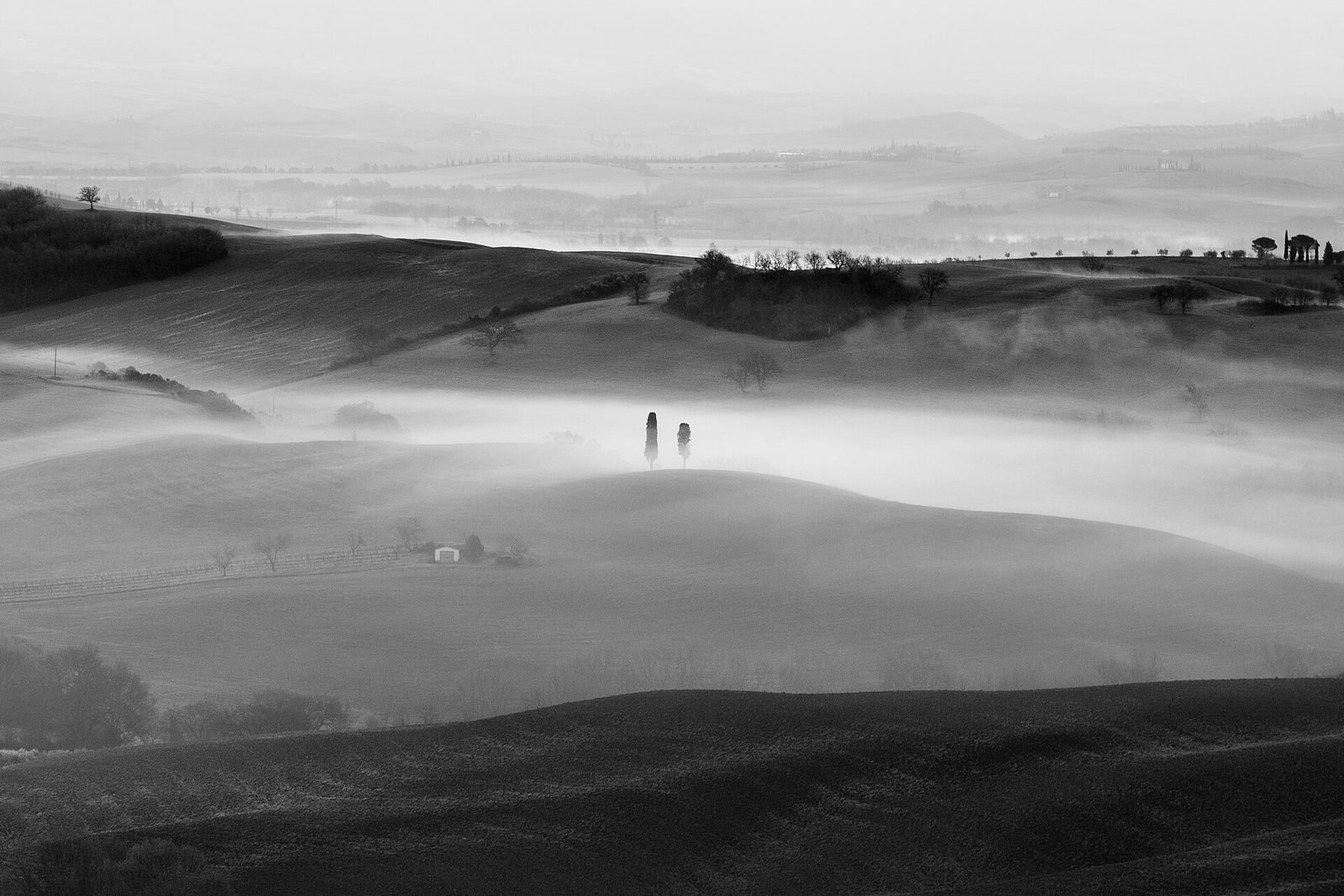
Photographs via Wikimedia Commons: header, St Peter's Square from the dome by Diliff (CC BY-SA 3.0); Duomo di Milano by Sarah Samoraj (CC BY 4.0); fresh pasta by Jorge Zapata (CC0); cypresses in Tuscany by Salvatore Gerace (CC0); Roman street by Jace Grandinetti (CC0).